Choosing Social Media Platforms
Choosing Social Media Platforms
Getting Started With Social Media Channel Selection: Do Research
You’ve started a new business. Let’s say you’ve created a seamless squeaking dog chew toy named Squeakternity. It can’t be torn open, won’t lose stuffing all over the house and will last for an eternity. How should you use social media to build brand awareness and a customer base? Do research. Research to understand what social media channels to use or avoid. Research to understand the overall direction for your business.

Research Social Media Statistics
According to Vos, each platform has its own audience with unique interests and needs. To research each social media platform’s audience, behaviors and current trends, check out these sources:
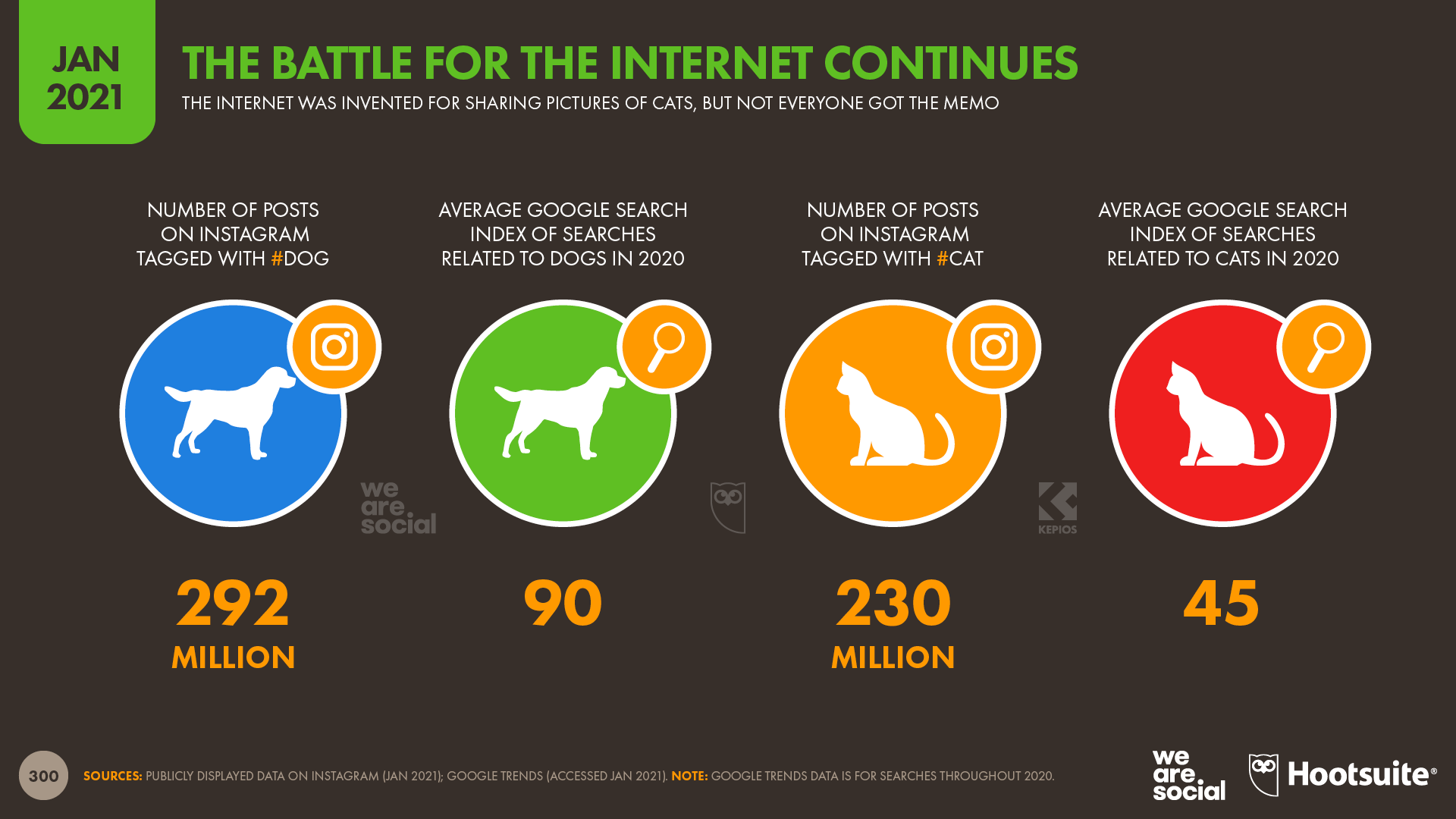
You might learn that 292 million Instagram posts were tagged with #dog.
Research Target Audience
Target audience research is vital. Who will buy Squeakternity? Can you define them? Perhaps there are multiple groups that need segmented. You can create an archetype personality for each group. With 70% of US households owning one or more pets in 2020 and 63 million dog-owning households there are likely multiple groups with their own unique characteristics that Squeakternity will need to define. It makes sense to choose channels where those audiences are hanging out rather than trying to lure them somewhere else.
Research Business and Competitors, Set Goals
Know your business goals and decide what platforms will help meet those goals. SWOT analysis can help identify goals. It will identify strengths, weaknesses, opportunities and threats. Additionally, you can learn what is working for your competitors and how you may position yourself in the market through the process. If you’ve never done a SWOT analysis, here is a video tutorial from 365 Careers:
A social media audit can also be useful. Squeakternity is starting out but could perform a social media audit of competitors. It will provide insights to the channels and strategies they are employing. Existing businesses can audit their social media to determine what works and what doesn’t. Then, they can refine their social media plan and should do so on an ongoing basis. Here is information on how to perform a basic social media audit.
How Many Social Media Platforms Should I Use?
Squeakternity may fall into the trap described by French where new marketers assume social media is the answer to all their business needs. They join every platform and believe it will be effective. This is not a good idea. French suggests that only one platform may be needed at first. Find the platform that meets business goals. For example, Squeakternity wants to build brand awareness. They know 32% of Millennials own dogs—more than Gen X 24% and Baby Boomers 27%.

Let’s choose Instagram for now. We know Millennials are on Instagram and that they follow businesses. Instagram has an option to set up a shop and dog photos do well there. Now in reality, we will have much more detailed information when we choose a platform for our businesses but you get the idea. French suggests this singular platform will help Squeakternity learn how to share their story, create good content and engage effectively.
Whether or not your business should expand beyond one platform depends on current knowledge of social media and the amount of time and resources available. This includes whether you plan to maintain social media yourself, have an in-house employee/team or outsource. Consider what tools you can afford. Tools exist for creating content, scheduling posts, engaging with users and analyzing your social media performance. An established business with adequate resources doesn’t necessarily need to use all platforms, though. Better Marketing postulates that a business bragging about their great engagement on multiple platforms is either not reaching their potential on any platform or they have a large social media marketing team.
Use Your Research to Select Channels
By this point you have gathered information, gained insights and determined clear goals. Squeakternity learned that 60% of Gen Z and 49% of Millennials will buy holiday gifts for their pets including Valentine’s Day. Ages 25-34 spend the most. Squeakternity set some goals to build brand awareness with the intent to create more conversions during the holidays when pet owners purchase pet toys.

Now they need to consider the following according to Chen:
- What platforms stand out as the best ones to meet goals?
- Where is your audience? If your business is established, check analytics to see where referrals are originating. Also, what have you learned about your target audience from social media trends reports?
- Is there a platform that performs better for your industry?
Wong suggests these considerations about your audience:
- How does your audience use the platform?
- What content do they like?
- Who do they follow?
- Are they passive or engaged in content creation?
Develop Content and Engage With Followers
Next, content creation begins. Vaynerchuk says that we live in a world that expects volume. He presents a slide deck showing how to create 64 pieces of content a day. Squeakternity likely won’t post that often but it is important to post regularly. The regular posts also need to display a consistent brand voice which helps build a relationship with your audience. Greenberg points out that once precedence is set for content frequency your audience will expect consistency. It takes work to create that much content but as Greenberg says, “Have something to say. Say it often. Be interesting.”
Content should encourage engagement. Specifically, it should encourage conversations. Rupp suggests that brands ask questions to get people talking and that they respond to comments. Responses don’t have to be lengthy. They should be personalized and genuine, though. Avoid product pushing unless there is a specific question asked as this will leave a better impression.
21 Rules for Social Engagement suggest the following thoughts:
- Participate where it will make a difference
- Understand the culture of each platform
- Avoid canned messages; instead provide relevant and valuable content
- Move beyond marketing and sales in your engagement with followers
If we don’t have conversations, then our content is just advertising according to Novak. The right type of content encourages interaction and has energy that gives it meaning and momentum. Squeakternity can remember this when it creates content. Perhaps they can even do some testing. Which of following most inspire you to have a conversation?
A. This is an Airedale Terrier

B. Taking dryer lint out of the trash and putting it in the toilet made Coda tired. What makes your dog tired?


Impressive blog and great pictures of Coda!
ReplyDeleteImpressive blog and great pictures of Coda!
ReplyDeleteThanks! Looks like you're triply impressed and love Coda 🙂
ReplyDeleteGreat post, Sheryl! Choosing social media channels can be a big challenge for brands so as not to overwhelm the digital marketing team. I think a lot of consideration should also go into what kind of personality your brand exudes. If a brand is more casual, like OREO or Goldfish, it may have more flexibility to create fun content on experimental platforms like TikTok. On the other hand, a more serious brand like GE may have more hoops to jump through in getting content approved, and it may not have the ability to latch onto trends quickly - so TikTok may not benefit the brand.
ReplyDeleteExcellent point! That said, GE might benefit from being on other platforms beyond Facebook. Personally, I might want to experiment with Instagram because some platforms for GE are very visual...
DeleteInteresting post and nice run through. And yes, conversations and engagement does matter, especially with pets.
ReplyDeleteHi Cheryl! I love how you added videos and graphics to your blog post! The dog is SO stinkin cute! I need to start incorporating more graphs and images in my posts!
ReplyDeleteThis is a great example of conversational content that inspires engagement! And I agree that companies need to be able to dedicate time to respond on platforms when people do engage. I like that part of the job, though!
ReplyDeleteLove the doggy pictures as well as the information provided! All of the graphics really helped in understanding how to get better engagement on certain social media platforms.
ReplyDeleteI wish I understood more of all this information (as a struggling small
ReplyDeletebusiness owner).
I can relate! I'm trying to expand my business beyond teaching and that's why I'm diving into this. I'm not an expert but I'd be willing to help you set some things up and point you to some resources.
Delete